
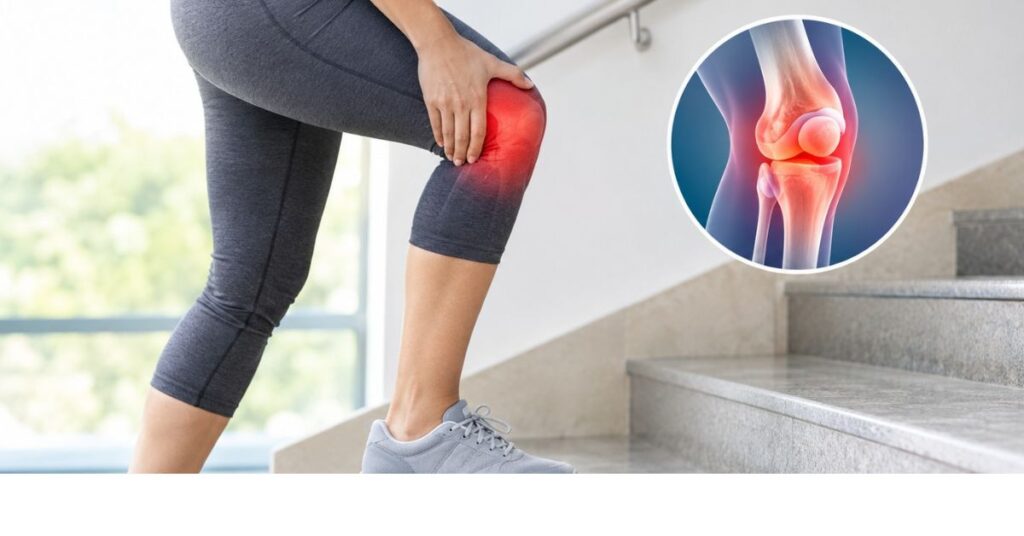
Knee pain while climbing stairs is a common problem that can affect people of different ages. You may notice pain around the kneecap, stiffness in the joint, or discomfort when climbing up or walking down stairs. Although occasional pain may result from muscle strain or overuse, persistent discomfort can indicate an underlying knee condition that requires medical attention.
Understanding the causes of knee pain while climbing stairs can help you take the right steps toward better joint health and improved mobility.
What Causes Knee Pain While Climbing Stairs?
Several conditions can cause knee pain during stair climbing. Identifying the underlying cause is important for choosing the appropriate treatment.
- Osteoarthritis
Osteoarthritis develops when the protective cartilage in the knee joint gradually wears down. This can cause pain, swelling, stiffness, and difficulty performing everyday activities. The discomfort may become more noticeable while climbing stairs, walking for long periods, or standing up after sitting.
- Patellofemoral Pain Syndrome
Patellofemoral pain syndrome occurs when the area around or behind the kneecap becomes painful. It is often associated with repetitive activities, muscle weakness, or changes in how the kneecap moves. People with this condition may experience increased pain while climbing stairs, squatting, or bending their knees.
- Muscle Weakness
The quadriceps and hip muscles help support the knee during movement. When these muscles are weak, the knee joint may experience additional stress during stair climbing. Appropriate strengthening exercises can help improve stability and movement.
- Meniscus or Ligament Injuries
A meniscus tear or ligament injury can cause knee pain, swelling, clicking, or a feeling that the knee is unstable. These injuries may occur during sports, sudden twisting movements, or accidents.
- Tendon Inflammation
Overuse of the knee can irritate the tendons surrounding the joint. Patellar tendinitis, for example, may cause pain near the kneecap, particularly during activities that involve bending and straightening the knee.
What Are the Symptoms to Watch For?
Knee pain may occur alongside other symptoms, including:
Pain while climbing or descending stairs
Swelling around the knee joint
Stiffness after sitting or resting
Clicking or grinding sensations
Difficulty bending or straightening the knee
Weakness or instability while walking
If these symptoms persist, worsen, or interfere with daily activities, consult an orthopaedic specialist for an appropriate assessment.
Treatment Options for Knee Pain
The treatment for knee pain depends on its cause, severity, and effect on daily movement. Not every patient requires surgery.
- Rest and Activity Modification
Temporarily reducing activities that aggravate the pain may help the knee recover. Avoid repeatedly climbing stairs or performing deep squats if these movements increase discomfort.
- Physiotherapy and Strengthening Exercises
A physiotherapist may recommend exercises to strengthen the thigh and hip muscles, improve flexibility, and support knee movement. Exercise selection should be based on the underlying condition and your pain level.
- Pain Management
A healthcare professional may recommend suitable pain-relieving medication when necessary. The choice of medication depends on your medical history and other health conditions.
- Weight Management
Maintaining a healthy weight can reduce the load placed on the knee joints. Combining appropriate physical activity with balanced nutrition may help improve mobility and joint comfort.
- Advanced Orthopaedic Treatment
If conservative treatments do not provide sufficient relief, further evaluation may be necessary. Depending on the diagnosis, options may include injections, arthroscopic procedures, or knee replacement surgery for selected patients with severe joint damage.
For more information, explore the Knee Pain Treatment in Indore page to learn about assessment and treatment options for different knee conditions.
How Can You Prevent Knee Pain While Climbing Stairs?
You can support your knee health by following these practical measures:
Perform regular, appropriate strengthening exercises.
Warm up before exercise and increase activity gradually.
Wear comfortable footwear with adequate support.
Avoid sudden increases in physical activity.
Maintain a healthy body weight.
Use a handrail when climbing stairs if you need additional support.
Do not push through sharp or worsening knee pain during exercise.
When Should You Consult an Orthopaedic Specialist?
Seek medical advice if knee pain continues for several weeks, repeatedly returns, or makes walking and climbing stairs difficult. Prompt assessment is also important if the knee locks, repeatedly gives way, or develops significant swelling.
Seek urgent medical attention if you cannot bear weight after an injury, the knee becomes severely swollen or deformed, or you develop a hot, red knee with fever.
An accurate diagnosis helps determine whether your symptoms are caused by arthritis, cartilage damage, a tendon problem, or another condition. Early assessment can help guide appropriate treatment and protect your mobility.
Conclusion
Knee pain while climbing stairs should not be ignored when it becomes persistent or affects your daily routine. Conditions such as osteoarthritis, kneecap-related pain, muscle weakness, and sports injuries can all contribute to discomfort. With the right diagnosis, appropriate exercises, lifestyle changes, and medical treatment when necessary, many knee problems can be managed effectively.
If you are experiencing persistent discomfort, consult an orthopaedic specialist for personalised guidance and explore the available options for knee pain treatment in Indore.