
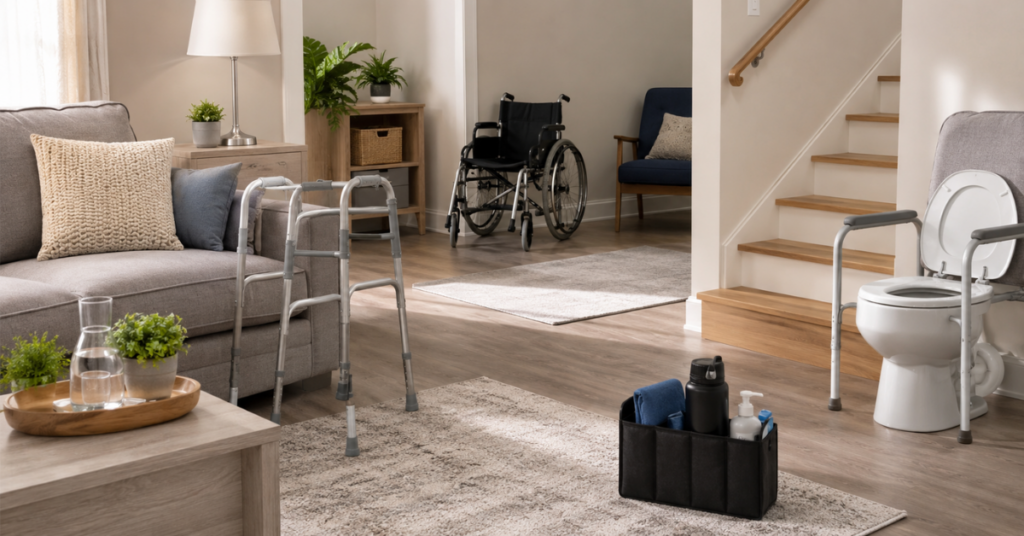
Preparing your home before knee replacement can make the early recovery period safer, easier, and more comfortable. Simple changes can reduce the risk of falls and help you move around with less difficulty. Ideally, make these arrangements before surgery, when you can walk, bend, and organize things more easily.
Create A Safe Walking Path
Start by making clear, open pathways through the areas you will use most. Remove loose rugs, clutter, and small furniture that could cause you to trip. Keep floors dry and secure electrical wires against walls where possible. Make sure there is enough space for a walker or crutches if your surgical team recommends them. Good lighting is also important, especially at night.
Make The Bedroom Easy To Access
If possible, arrange ground-floor access to your bedroom during the early recovery period, particularly if stairs are difficult to manage. Keep frequently used clothing, personal items, and other essentials within easy reach. Place a lamp or night light nearby so you can see clearly when getting up. If you must use stairs, discuss safe stair use with your physiotherapist.
Prepare The Bathroom
The bathroom needs special attention because wet surfaces can increase the risk of falls. Consider grab bars, a shower chair, or a raised toilet seat if they are appropriate for your needs. Use secure, non-slip surfaces and keep toiletries at a convenient height. Your surgeon or physiotherapist can advise which equipment is suitable based on your mobility and bathroom layout.
Arrange Comfortable Seating
Choose a stable chair with armrests that allows you to sit down and stand up without excessive effort. Very low sofas, soft chairs, or seats that sink deeply may be harder to get out of after surgery. Place a comfortable chair in an area where you can rest while keeping important items nearby.
Keep Essential Items Within Reach
Set up a small recovery area with medicines, water, your phone, remote control, books, and personal items close by. Avoid storing frequently used objects on high shelves or low cabinets. Keeping essentials nearby can reduce unnecessary bending, stretching, and repeated walking during the initial recovery period.
Plan Meals And Household Tasks
Prepare some meals in advance or arrange easy-to-prepare foods for the first few days. Ask someone to help with cooking, cleaning, laundry, and shopping when needed. Reducing household responsibilities allows you to focus on your prescribed exercises, rest, and safe movement.
Arrange Support Before Surgery
Having a family member, caregiver, or trusted person available during the early recovery period can be helpful. They may assist with meals, household activities, transportation, or other daily needs. The amount of support required varies depending on your mobility, overall health, home environment, and the recommendations of your healthcare team.
Follow Your Surgical Team’s Instructions
Home preparation should complement, not replace, advice from your orthopedic surgeon and physiotherapy team. Equipment such as walkers, shower chairs, or raised toilet seats may not be necessary for everyone. Before your procedure, ask your care team what changes are appropriate for your specific recovery needs. Planning ahead can make returning home after knee replacement much more manageable, and patients considering knee replacement surgery in indore can discuss home-preparation needs with their orthopedic care team before the procedure.
FAQs
How long before knee replacement should I prepare my home?
It is best to make changes several days or weeks before surgery, while you can comfortably organize your surroundings.
Do I need a walker at home after knee replacement?
Some patients use a walker temporarily, but the need depends on mobility and the surgeon or physiotherapist’s recommendation.
Should I move my bedroom downstairs?
If stairs are difficult or unsafe, ground-floor sleeping arrangements may be helpful during early recovery.
How can I make my bathroom safer?
Improve lighting, stable support, non-slip surfaces, and consider equipment recommended by your healthcare team.
Should someone stay with me after knee replacement surgery?
Having temporary support at home can be useful, especially during the early recovery period when everyday tasks may be more difficult.