
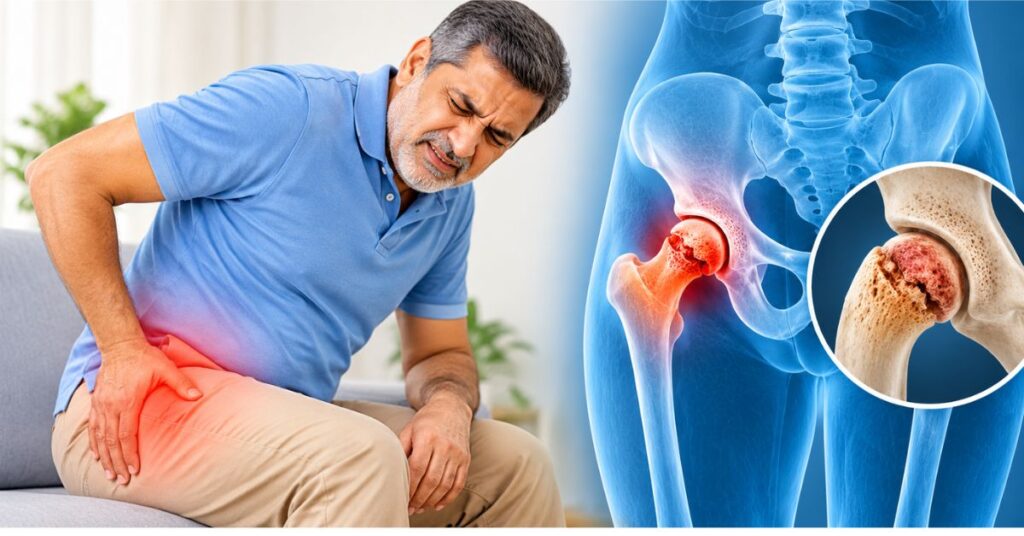
Hip pain can sometimes indicate more than a muscle strain or joint stiffness. One possible cause is Avascular Necrosis (AVN) of the hip, a condition in which the blood supply to the femoral head (the upper part of the thigh bone) is reduced or interrupted. Without adequate blood supply, bone tissue can gradually become damaged and may eventually collapse.
Early diagnosis and appropriate treatment can help manage symptoms and protect the hip joint. Understanding the warning signs is important for patients experiencing persistent hip pain.
What Is Avascular Necrosis of the Hip?
Avascular Necrosis, also known as osteonecrosis, occurs when bone tissue does not receive enough blood. In the hip, it commonly affects the femoral head, which forms part of the hip joint.
As the condition progresses, the affected bone may weaken and lose its normal shape. This can lead to joint damage, stiffness, and difficulty walking. AVN can affect one or both hip joints.
What Are the Early Symptoms of Hip AVN?
In the initial stages, some patients may not experience noticeable symptoms. As the condition progresses, the following signs may develop:
- Deep Hip Pain: Pain may begin in the groin area and gradually increase.
- Pain While Walking: Standing, walking, or putting weight on the affected leg may cause discomfort.
- Hip Stiffness: Reduced flexibility may make everyday movements difficult.
- Pain During Physical Activity: Symptoms may become more noticeable after walking, climbing stairs, or exercising.
- Pain at Rest: In advanced stages, discomfort may continue even while sitting or sleeping.
- Difficulty Walking: Progressive joint damage can affect normal movement and mobility.
If hip pain persists or becomes worse, consult an orthopedic specialist for proper evaluation.
What Causes Avascular Necrosis of the Hip?
Several factors can affect blood circulation to the femoral head and increase the risk of AVN.
Common risk factors include:
- Long-Term Steroid Use: Prolonged or high-dose corticosteroid use may increase the risk.
- Excessive Alcohol Consumption: Heavy alcohol use can contribute to bone and blood vessel damage.
- Hip Injury: A fracture or dislocation may interrupt the blood supply to the hip bone.
- Certain Medical Conditions: Some blood disorders and autoimmune conditions are associated with AVN.
- Previous Medical Treatment: Certain treatments may affect bone health and circulation.
In some patients, the exact cause cannot be identified.
How Is Avascular Necrosis Diagnosed?
Early diagnosis is important because treatment depends on the stage of bone damage.
An orthopedic surgeon may recommend:
- Physical Examination: To assess hip movement, pain, and walking ability.
- X-ray: To identify changes in the hip joint and advanced bone damage.
- MRI Scan: To detect early AVN changes, even before they become visible on an X-ray.
- CT Scan: In selected cases, to assess bone structure and identify collapse.
These investigations help determine the extent of damage and guide treatment planning.
What Are the Treatment Options for Avascular Necrosis of the Hip?
Treatment depends on the stage of AVN, the amount of bone damage, the patient’s age, and overall health.
1. Non-Surgical Treatment
In early cases, treatment may focus on managing symptoms and reducing stress on the affected hip. Options may include prescribed medications, activity modification, walking support, and supervised physiotherapy.
These measures may help manage discomfort but cannot reliably restore damaged bone tissue.
2. Core Decompression Surgery
Core decompression is a joint-preserving procedure that may be considered in selected patients with early-stage AVN before the femoral head collapses. It involves creating a small channel in the affected bone to reduce pressure and support the healing process.
The suitability of this procedure depends on the stage and extent of the condition.
3. Bone Grafting
In selected cases, bone grafting may be performed along with other procedures to support the affected area. The approach depends on the patient’s bone condition and the surgeon’s assessment.
4. Total Hip Replacement Surgery
When AVN progresses and causes femoral head collapse or significant joint damage, Total Hip Replacement Surgery may be recommended. The damaged joint surfaces are replaced with artificial components to help improve movement and reduce pain.
An orthopedic surgeon evaluates whether hip replacement is appropriate based on symptoms, imaging findings, and functional limitations.
Can Avascular Necrosis Be Prevented?
Not every case of AVN can be prevented, but certain measures may help reduce risk:
- Avoid excessive alcohol consumption.
- Take steroid medications only under medical supervision.
- Maintain a healthy body weight.
- Seek timely treatment for hip injuries.
- Consult a doctor if persistent hip pain develops.
Consult Dr. Aditya Lakhotia for Hip Pain and AVN Treatment
Persistent hip pain, stiffness, or difficulty walking should not be ignored. Early evaluation can help identify conditions such as Avascular Necrosis and determine suitable treatment options.
Dr. Aditya Lakhotia, Orthopedic Surgeon in Indore, provides consultation for hip-related conditions, joint problems, and hip replacement surgery. Patients experiencing symptoms of hip AVN can seek an orthopedic assessment to understand their condition and available treatment options.