
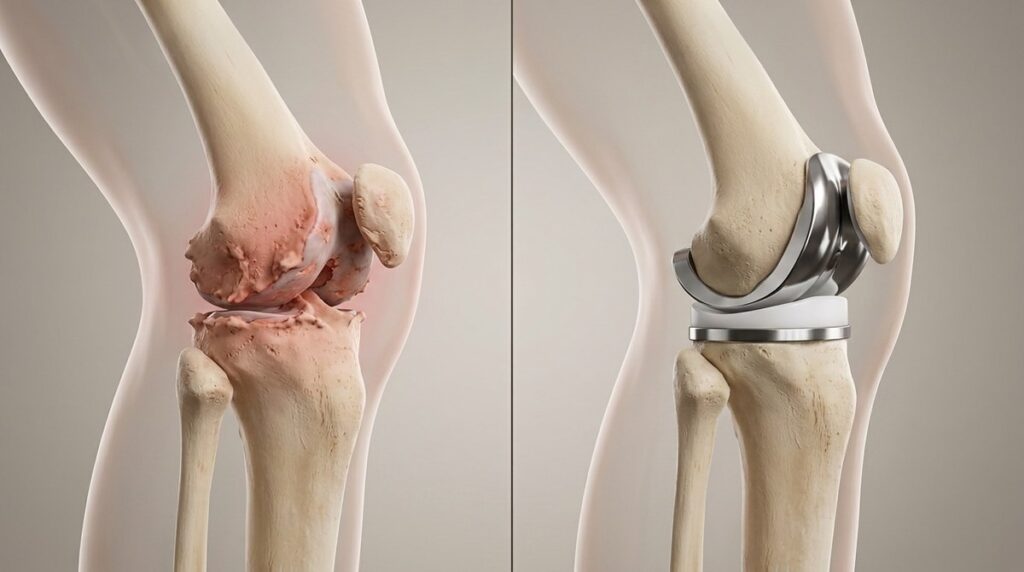
Knee pain can make everyday activities difficult. Walking, climbing stairs, and even standing for a few minutes may become uncomfortable. When medication, physiotherapy, and other treatments no longer provide relief, Knee Replacement Surgery in Indore may be an option worth discussing with an orthopedic specialist.
However, not every patient needs the same type of surgery. The right procedure depends on the extent of cartilage damage, the location of arthritis, knee stability, and overall health.
Modern knee replacement techniques offer different treatment options. These range from replacing a small damaged part of the knee to replacing the entire joint. Understanding these options can help patients make informed decisions about their treatment.
What Is Knee Replacement Surgery?
Knee replacement surgery is a procedure that replaces damaged joint surfaces with artificial components. These components are usually made from medical-grade metal and durable plastic.
The main goal is to reduce pain, improve knee movement, and help patients return to everyday activities.
Doctors may recommend surgery for patients with severe osteoarthritis, rheumatoid arthritis, or significant joint damage following an injury.
Before recommending Knee Replacement Surgery in Indore, an orthopedic surgeon evaluates the patient’s symptoms, medical history, physical examination findings, and imaging reports.
The treatment plan is then tailored to the patient’s individual needs.
1. Total Knee Replacement Surgery
Total knee replacement is one of the most commonly performed knee replacement procedures.
In this surgery, the damaged surfaces of the thighbone and shinbone are replaced with artificial components. The surgeon may also treat the underside of the kneecap when necessary.
Who May Need Total Knee Replacement?
This procedure may be suitable for patients who have:
- Advanced osteoarthritis affecting multiple areas of the knee.
- Persistent knee pain that interferes with daily activities.
- Significant stiffness or reduced knee movement.
- Difficulty walking despite non-surgical treatment.
- Joint damage that affects sleep or quality of life.
Total knee replacement aims to reduce pain and improve mobility.
Recovery takes time and requires a structured rehabilitation programme. Physiotherapy helps patients regain strength, improve flexibility, and learn to walk comfortably.
For patients with extensive joint damage, total knee replacement may offer meaningful improvements in everyday function.
2. Partial Knee Replacement Surgery
Partial knee replacement is another option for selected patients.
Unlike total knee replacement, this procedure replaces only the damaged section of the knee. The remaining healthy joint surfaces, ligaments, and other structures are preserved when possible.
The knee has three main compartments: medial, lateral, and patellofemoral.
Partial replacement may target one of these compartments, depending on where the damage occurs.
Who Is a Suitable Candidate?
A patient may be considered for partial knee replacement when:
- Arthritis is limited to one compartment.
- The remaining joint surfaces are relatively healthy.
- The knee ligaments are functioning adequately.
- Symptoms and examination findings match the affected compartment.
Partial knee replacement may allow faster recovery and preserve more natural knee movement in appropriately selected patients.
However, it is not suitable for everyone. If arthritis affects several compartments or the knee is significantly unstable, total knee replacement may be more appropriate.
An orthopedic specialist can determine which option is suitable after a detailed assessment.
3. Robotic-Assisted Knee Replacement Surgery
Robotic-assisted knee replacement uses advanced technology to help surgeons plan and perform the procedure.
Depending on the system, the technology may provide detailed anatomical information, support surgical planning, and help guide bone preparation and implant positioning.
It is important to understand that the robot does not independently perform the entire operation. The orthopedic surgeon remains responsible for the surgical procedure and all treatment decisions.
What Are the Potential Benefits?
Robotic-assisted surgery may offer several advantages in selected cases:
- Detailed preoperative planning.
- Assistance with implant positioning.
- Real-time information during specific surgical steps.
- Support for individualized surgical techniques.
The actual benefits depend on the patient’s condition, the technology used, and the surgeon’s experience.
Robotic assistance does not guarantee better outcomes for every patient. Traditional knee replacement remains an effective option for many people.
When exploring Knee Replacement Surgery in Indore, patients should ask their surgeon whether robotic assistance is appropriate for their specific condition.
4. Revision Knee Replacement Surgery
Revision knee replacement is performed when a previous knee replacement needs to be repaired or replaced.
Although many knee implants function well for years, complications can sometimes develop.
These may include implant loosening, infection, instability, excessive wear, or persistent pain associated with the artificial joint.
When Is Revision Surgery Required?
A specialist may consider revision surgery when investigations identify a problem that cannot be managed adequately with other treatments.
The procedure may involve replacing some or all of the existing implant components. In complex cases, additional surgical techniques or specialised implants may be necessary.
Revision surgery is generally more complex than a first-time knee replacement.
Therefore, careful evaluation is essential. Doctors may use X-rays, blood tests, joint fluid analysis, or other investigations to identify the underlying cause before recommending treatment.
5. Bilateral Knee Replacement Surgery
Bilateral knee replacement refers to replacing both knee joints.
There are two main approaches: simultaneous and staged bilateral replacement.
Simultaneous Bilateral Knee Replacement
Both knees are replaced during the same operation.
This approach may be considered for selected patients who are medically fit and have severe arthritis in both knees.
However, it can involve greater demands on the body during surgery and early recovery.
Staged Bilateral Knee Replacement
In this approach, each knee is replaced in a separate operation.
The procedures are performed at different times, allowing the patient to recover from the first surgery before undergoing the second.
The appropriate approach depends on age, overall health, cardiovascular risk, mobility, and the severity of arthritis.
Not every patient with pain in both knees is a suitable candidate for simultaneous surgery. A detailed medical assessment helps determine the safest treatment plan.
How Do Doctors Decide Which Knee Replacement Is Best?
Choosing the right procedure involves more than looking at an X-ray.
An orthopedic surgeon considers several factors before recommending surgery.
1. Extent of Joint Damage
If arthritis affects most of the knee, total knee replacement may be appropriate. If the damage is limited to one compartment, partial replacement may be considered.
2. Age and Activity Level
Age alone does not determine whether someone needs surgery. Activity level, bone health, general fitness, and individual treatment goals are also important.
3. Ligament Stability
The condition of the knee ligaments helps determine whether a partial or total replacement is suitable.
4. General Health
Diabetes, heart disease, obesity, and other medical conditions may affect surgical planning and recovery.
These conditions do not automatically prevent surgery. However, managing them properly can help reduce potential complications.
5. Previous Treatments
Doctors usually consider knee replacement when appropriate non-surgical treatments no longer provide sufficient relief.
These treatments may include physiotherapy, activity modification, weight management, and medication when medically appropriate.
A personalised assessment helps identify the most suitable option for each patient.
What Is the Recovery Time After Knee Replacement Surgery?
Recovery varies according to the type of surgery, the patient’s health, and their rehabilitation progress.
Many patients begin standing or walking with assistance soon after surgery. A physiotherapist guides early movement and teaches exercises that support recovery.
During the following weeks, patients gradually increase their activity as advised by their healthcare team.
Some patients resume many everyday activities within six to twelve weeks. However, complete recovery can take several months, and individual results vary.
Following these recommendations can support recovery:
- Attend scheduled physiotherapy sessions.
- Perform prescribed exercises regularly.
- Keep the surgical wound clean and follow wound-care instructions.
- Take prescribed medicines as directed.
- Attend follow-up appointments.
- Report unusual swelling, fever, wound discharge, or worsening pain promptly.
Recovery is a gradual process. Patients should avoid rushing back into strenuous activities before receiving medical clearance.
Why Consult an Orthopedic Specialist for Knee Replacement Surgery in Indore?
Selecting the right surgeon and treatment plan is an important part of knee replacement care.
Patients should look for an orthopedic specialist who can explain the diagnosis, discuss available procedures, and outline the expected benefits and risks.
It is also helpful to understand the rehabilitation plan before surgery.
At the time of consultation, patients can ask about implant options, surgical techniques, hospital care, expected recovery, and follow-up arrangements.
For people considering Knee Replacement Surgery in Indore, a detailed consultation with Dr. Aditya Lakhotia can help clarify the available treatment options and determine whether surgery is appropriate.
The final decision should be based on a thorough clinical assessment rather than the popularity of a particular surgical technique.
Conclusion
Knee replacement surgery can help selected patients with advanced arthritis reduce pain and improve mobility when other treatments have not provided sufficient relief.
The main options include total knee replacement, partial knee replacement, robotic-assisted surgery, revision surgery, and bilateral knee replacement.
Each procedure serves a different purpose. The best option depends on the location and severity of joint damage, ligament stability, general health, and personal treatment goals.
If persistent knee pain is affecting your daily life, consider consulting an orthopedic specialist to discuss your options for Knee Replacement Surgery in Indore.
An individualised treatment plan, appropriate surgical care, and consistent rehabilitation can help support a safer recovery and better functional outcomes.
Frequently Asked Questions (FAQs)
1. What are the main types of knee replacement surgery?
The main types include total knee replacement, partial knee replacement, robotic-assisted knee replacement, revision knee replacement, and bilateral knee replacement. The appropriate procedure depends on the patient’s condition and treatment needs.
2. Is partial knee replacement better than total knee replacement?
Neither procedure is universally better. Partial replacement may suit patients whose arthritis affects only one compartment. Total replacement may be more appropriate when damage affects multiple compartments of the knee.
3. Is robotic knee replacement more effective than traditional surgery?
Robotic-assisted surgery can help with surgical planning and implant positioning. However, it does not guarantee better results for every patient. The choice depends on the patient’s condition, available technology, and the surgeon’s clinical judgement.
4. How long does it take to recover from knee replacement surgery?
Many patients resume several everyday activities within six to twelve weeks. Full recovery may take several months. The exact timeline depends on the procedure, overall health, and participation in rehabilitation.
5. When should I consider knee replacement surgery in Indore?
You may consider an orthopedic consultation if persistent knee pain, stiffness, or difficulty walking continues despite appropriate non-surgical treatment. A specialist can assess your joint condition and explain whether knee replacement is a suitable option.
For More Information, Visit Now: https://share.google/7Gu44TxWRlP5NoXA4