
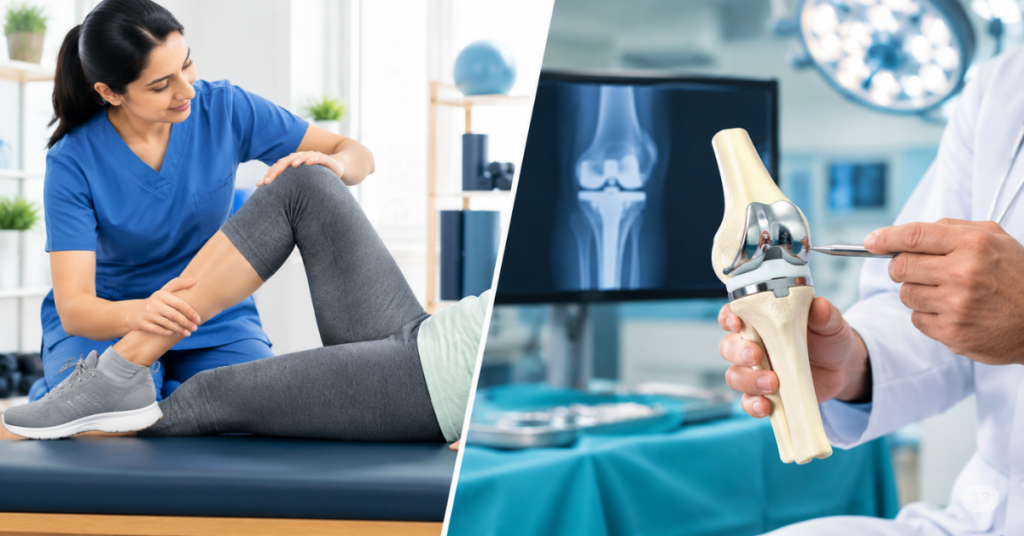
Knee pain doesn’t always mean you need surgery. Most knee problems get better with physiotherapy, exercise, medicines or other non-surgical treatments. The appropriate treatment depends on the cause and severity of the problem, your mobility, daily activities and how well you respond to conservative treatment.
When Physical Therapy Can Help Improve Strength And Mobility
Physiotherapy can help many people with knee pain, stiffness, weakness or problems with movement. A physiotherapist may recommend exercises to strengthen the muscles around the knee and improve flexibility, balance, stability and joint function.
First, there are conditions that can be treated conservatively, such as mild to moderate osteoarthritis, muscle weakness, some sports injuries or pain due to reduced mobility. Your treatment plan may include exercises and activity modification that can be continued at home.
When To Think About A Knee Replacement
Knee replacement is typically suggested when the knee joint is significantly or severely damaged and symptoms are impacting daily living. Persistent pain, severe stiffness, trouble walking or reduced ability to climb stairs or perform routine activities may bring you to a surgical evaluation.
Generally, physicians resort to replacement when nonsurgical options haven’t provided enough relief and imaging reveals significant joint damage. It’s not just an X-ray but symptoms and overall function are important.
Physiotherapy Versus Knee Replacement
Physiotherapy aims to improve knee function and control symptoms, not to replace the damaged joint. Knee replacement, however, is a procedure that replaces damaged joint surfaces with artificial parts.
These treatments are not always alternatives. You may be advised to have physiotherapy before surgery to improve strength and mobility. Physiotherapy is also an important part of rehabilitation after knee replacement.
How To Choose The Right Option For Physicians
Usually you will be examined by an orthopaedic specialist and your medical history will be reviewed. They may test your pain, ability to walk, range of motion, joint stability, and how symptoms affect daily activities. If needed, X-rays or other imaging may be recommended to better understand the condition of the joint.
Your age, general health, activity level, existing medical conditions, previous treatments, and response to physiotherapy or other care might also affect the treatment plan. If knee symptoms are persistent or interfering with normal activities, you can make an informed decision by discussing your options with an orthopaedic specialist. If you are looking for knee pain treatment in indore, an individual evaluation can help you to decide if physiotherapy, medication, lifestyle changes, or surgical treatment is right for you.
FAQs
1. Is Surgery Always Necessary for Knee Pain?
No. Most people with knee symptoms can get by with physiotherapy, exercise, medicines, weight management or activity changes. Surgery is recommended when symptoms and damage to the joint are significant and non-surgical care is not providing enough relief.
2. How long should I try physiotherapy before I consider surgery?
There’s no set time limit for everyone. It is contingent upon the cause of the pain, the extent of joint damage, the progress of treatment and how it affects your daily life.
3. Is physiotherapy able to delay knee replacement?
In some cases, people may be able to control symptoms and maintain function for a period of time with physiotherapy and other conservative treatments. But it cannot repair advanced joint damage.
4. Do I need physiotherapy after knee replacement?
Yes. Rehabilitation is an important part of recovery after knee replacement surgery. Exercises restore strength, movement, balance and confidence in doing everyday activities.
5. When do I need to see an orthopaedic specialist?
If knee pain is severe, limits walking or daily activities, causes significant stiffness, or does not improve with appropriate self care, see a doctor for an evaluation. A specialist can diagnose the cause and discuss treatment options that are appropriate.