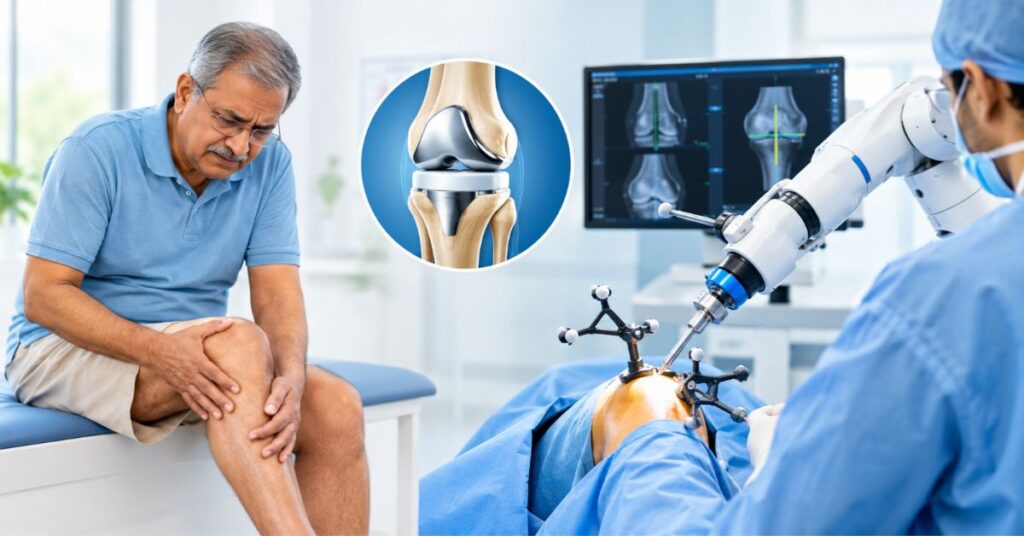
Severe knee arthritis can cause persistent pain, stiffness, swelling, and difficulty performing daily activities such as walking, climbing stairs, or standing for long periods. When medicines, physiotherapy, and other non-surgical treatments no longer provide sufficient relief, knee replacement surgery may be recommended.
Robotic knee replacement surgery in Indore is an advanced surgical option that helps surgeons plan and perform knee replacement with computer-assisted precision. It may be beneficial for selected patients with advanced knee arthritis, depending on their condition and overall health.
How Does Severe Knee Arthritis Affect the Knee?
Knee arthritis, particularly osteoarthritis, develops when the protective cartilage covering the ends of the bones gradually wears away. In severe cases, this can lead to bone-on-bone contact, inflammation, deformity, and restricted movement.
Common symptoms include:
- Persistent knee pain, even during rest
- Stiffness after sitting or waking up
- Swelling and reduced knee movement
- Difficulty walking or climbing stairs
- Bowing of the legs or changes in knee alignment
When these symptoms significantly affect quality of life, an orthopedic specialist may evaluate whether knee replacement is appropriate.
How Does Robotic Knee Replacement Work?
Robotic-assisted knee replacement uses advanced technology to help the surgeon plan the procedure according to the patient’s knee anatomy. It provides detailed information about bone structure, alignment, and movement, supporting more precise surgical planning.
During surgery, the orthopedic surgeon remains in control and uses the robotic-assisted system to guide specific steps of the procedure. The aim is to achieve appropriate implant positioning, alignment, and soft-tissue balance.
Benefits of Robotic Knee Replacement for Severe Arthritis
For suitable patients, robotic-assisted knee replacement may offer several benefits:
1. Personalized surgical planning: The procedure can be planned according to the patient’s individual knee anatomy.
2. Improved surgical precision: Robotic assistance can help the surgeon make accurate bone cuts and position the implant according to the surgical plan.
3. Assessment of knee alignment: The technology can help evaluate knee alignment and balance during the procedure.
4. Potentially improved functional recovery: Appropriate implant positioning and rehabilitation may help patients regain mobility. Recovery varies from person to person.
5. Support for complex knee conditions: Selected patients with significant arthritis or knee deformity may benefit from detailed preoperative planning.
However, robotic surgery does not guarantee a pain-free knee, faster recovery, or better outcomes for every patient. Results depend on several factors, including the severity of arthritis, general health, surgical expertise, and rehabilitation.
Is Robotic Knee Replacement Better Than Traditional Surgery?
Both robotic-assisted and conventional knee replacement can provide effective relief from severe knee arthritis. Robotic assistance offers additional planning and guidance tools, but it is not necessarily the best choice for every patient.
The decision depends on the patient’s knee condition, bone deformity, medical history, and the surgeon’s assessment. Patients should discuss the potential benefits, limitations, risks, and costs of both approaches before deciding.
Who May Need Robotic Knee Replacement Surgery?
Robotic knee replacement may be considered for patients who have:
- Advanced osteoarthritis with persistent pain
- Significant difficulty walking or performing daily activities
- Knee deformity or alignment problems
- Limited relief from medicines, physiotherapy, and other conservative treatments
An orthopedic consultation and appropriate imaging are necessary to determine whether knee replacement is suitable.
Recovery After Robotic Knee Replacement
Recovery involves pain management, wound care, walking exercises, and physiotherapy. Many patients begin assisted walking soon after surgery, depending on their condition and the surgeon’s advice. Gradually, exercises help improve knee movement, strength, and balance.
Following medical instructions, attending rehabilitation sessions, and maintaining a healthy weight can support recovery. The time required to return to normal activities varies between individuals.
Consult an Orthopedic Specialist in Indore
If severe knee arthritis is affecting your mobility and quality of life, consult an experienced orthopedic specialist to understand your treatment options. Patients considering robotic knee replacement surgery in Indore should undergo an individual assessment to determine whether robotic-assisted or conventional knee replacement is appropriate.
Early evaluation can help you understand the available treatments and make an informed decision about managing knee pain.