
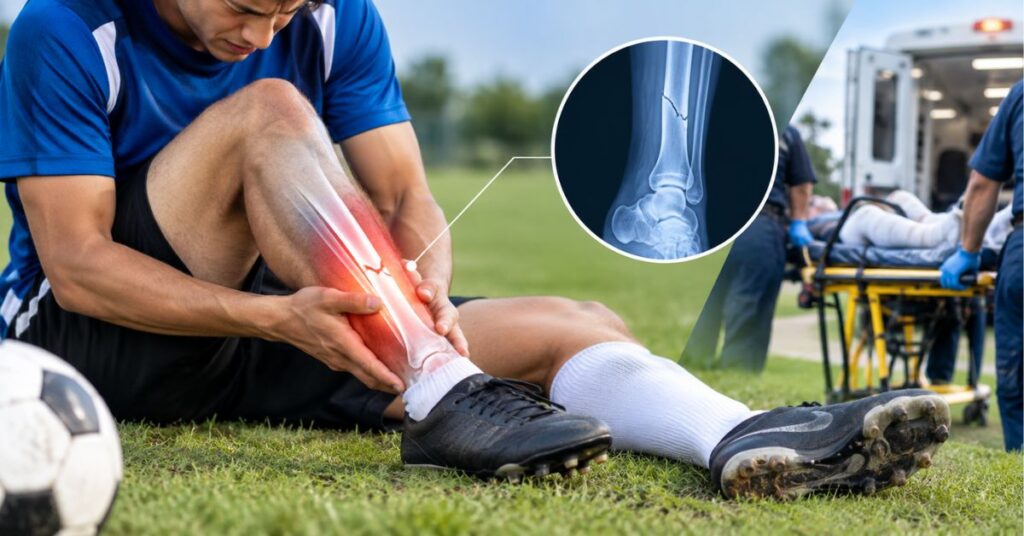
Sports activities can help increase strength, fitness and general health, but accidents and abrupt impacts can often result in catastrophic injuries. One of the most common sports injuries is a fracture. This can be caused by falling, by a direct collision, by a twisting action or by putting too much strain on a bone. Early identification of warning symptoms and prompt medical intervention can avert problems.
Signs and Symptoms of a Sports Related Fracture
With a fracture , there can be rapid and severe pain at the site of injury . Other frequent symptoms include swelling, bruising, trouble moving the damaged limb, discomfort and an inability to place weight on the afflicted leg or foot. In other circumstances the wounded part may look distorted or strange in appearance.
Some fractures are not visible. Some minor or stress fractures may produce little pain at first, but it will increase with exercise. Persistent soreness after sports should not be overlooked.
When to Visit the Emergency Room
If there is extreme pain , major swelling , apparent deformity , or an inability to move the affected body part , immediate medical assistance is needed . An open fracture is one in which the bone has broken through the skin. Open fractures require immediate medical care due to the risk of infection and other consequences.
It’s particularly crucial to get an emergency evaluation if there is numbness, tingling, unexpected coldness, or a change in skin color below the injury. These indications may indicate nerve or blood circulation disorders.
Why You Should Not Delay Treatment
Sometimes, waiting to treat a fracture might also alter how the bone heals. Treatment depends on site and severity of damage, and may include immobilization with a cast or brace, medicines, physiotherapy or surgery.
The medical assessment could involve a physical exam and imaging procedures such as an X-ray. If a tiny or complicated damage is suspected, further imaging may be necessary.
See an Orthopedic Specialist
If you are experiencing severe pain or any other troubling symptoms following a sports injury, seek prompt medical attention from an orthopedic Surgeon in Indore. Getting it diagnosed early helps to ensure that the right therapy is given and that recovery can be safe.
Athletes also should not return to sports until the injury has been adequately evaluated and the area of injury has sufficiently healed. Following medical guidance and a good recovery plan can lessen the risks of reinjury.