
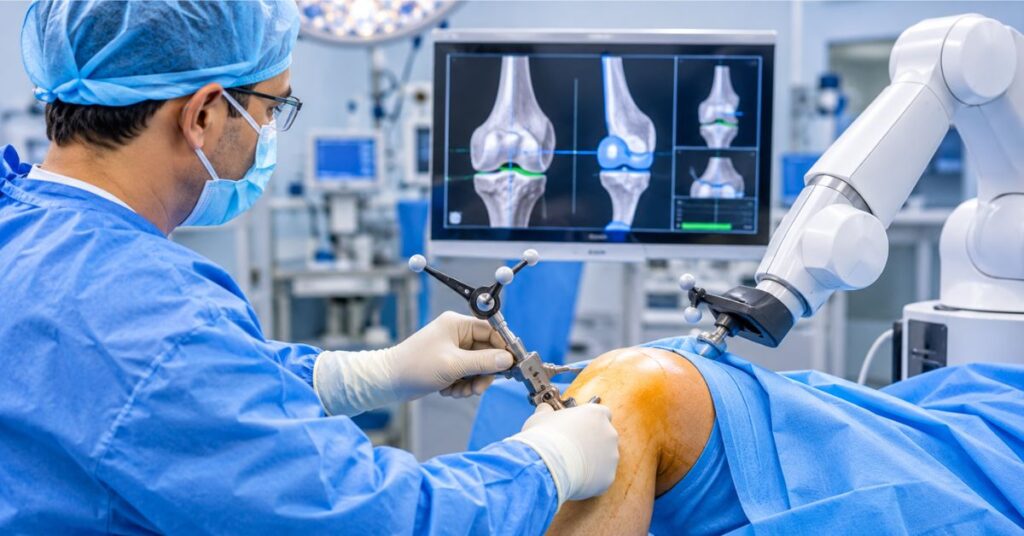
Knee pain caused by advanced arthritis can make everyday activities such as walking, climbing stairs, and standing difficult. When medications, physiotherapy, and other non-surgical treatments no longer provide sufficient relief, knee replacement surgery may be considered. With advancements in orthopedic technology, computer-assisted techniques are helping surgeons plan and perform knee replacement procedures with greater precision.
But what exactly is computer-assisted knee replacement, and how does this technology work?
What Is Computer-Assisted Knee Replacement?
Computer-assisted knee replacement is a surgical technique that uses specialised computer navigation technology to help surgeons assess knee anatomy, evaluate leg alignment, and guide implant positioning during surgery.
The technology collects information about the patient’s knee joint and displays it on a computer screen. This allows the surgeon to monitor important measurements and make informed decisions during different stages of the procedure.
Unlike traditional techniques that rely primarily on conventional surgical instruments, computer-assisted surgery provides additional digital guidance throughout the operation.
How Does Computer-Assisted Knee Replacement Work?
The procedure generally involves several important steps:
1. Preoperative Assessment
Before surgery, the orthopedic surgeon evaluates the patient’s knee condition through physical examination and appropriate imaging tests. This helps determine the extent of joint damage and plan the procedure.
2. Computer Mapping of the Knee
During surgery, specialised tracking devices help identify important anatomical points around the knee. The computer uses this information to create a digital representation of the joint and assess its alignment.
3. Surgical Planning and Navigation
The computer provides real-time information about bone alignment, cutting angles, and implant positioning. The surgeon uses these measurements to guide surgical instruments and make necessary adjustments.
4. Implant Placement
Once the damaged joint surfaces have been prepared, artificial components are positioned to replace the affected parts of the knee. Computer navigation helps the surgeon assess implant alignment during this stage.
5. Final Assessment
Before completing the procedure, the surgeon checks knee movement, alignment, and joint balance to evaluate the placement of the components.
What Are the Potential Benefits?
Computer-assisted technology may offer several advantages in selected patients:
- Improved Alignment Assessment: Helps surgeons evaluate leg alignment and implant positioning.
- Real-Time Guidance: Provides additional measurements during surgery.
- Individualised Planning: Allows surgical planning based on the patient’s anatomy.
- Greater Surgical Control: Helps the surgeon monitor important measurements during the procedure.
- Useful in Complex Cases: May be particularly helpful when patients have unusual bone anatomy or previous injuries.
However, computer assistance does not guarantee better functional outcomes for every patient. Results depend on individual conditions and surgical expertise.
Who May Need Computer-Assisted Knee Replacement?
Patients with advanced knee osteoarthritis, significant joint damage, persistent knee pain, or certain anatomical abnormalities may be evaluated for this procedure. The suitability of computer-assisted techniques depends on the patient’s medical history, bone structure, and overall joint condition.
Is Computer-Assisted Knee Replacement Different from Robotic Surgery?
Yes. Computer navigation provides digital guidance and measurements, whereas robotic-assisted surgery uses a robotic system to help guide specific surgical movements. Both technologies support the surgeon, but they are not identical. The surgeon remains responsible for performing the operation.
Patients exploring Computer Assisted Knee Replacement in Indore can consult Dr. Aditya Lakhotia to understand their treatment options. Depending on their condition, they can also learn about robotic-assisted knee replacement surgery and other available treatment approaches.