
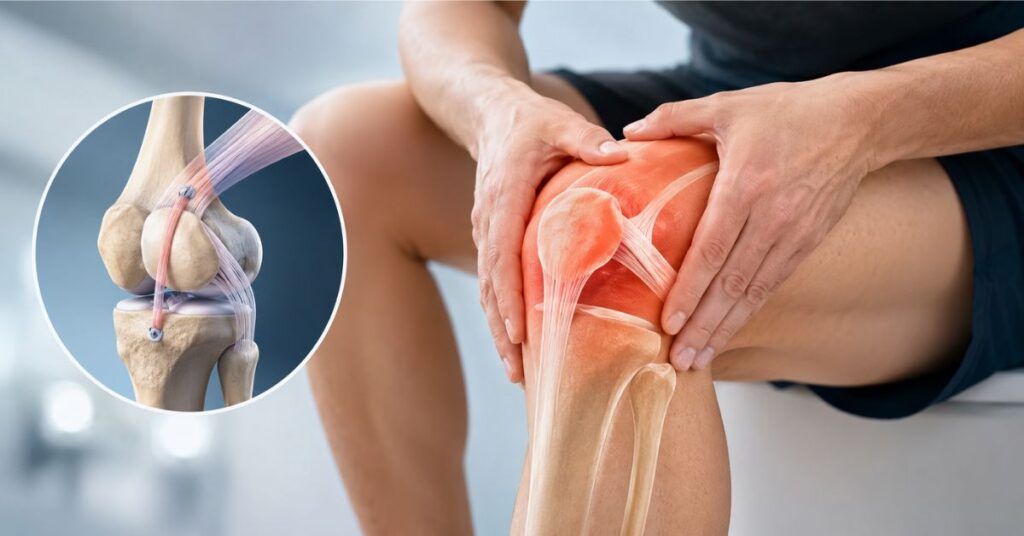
A kneecap that repeatedly slips or dislocates can make everyday activities painful and stressful. Patients may experience knee instability while walking, climbing stairs, exercising, or playing sports. Repeated kneecap dislocation can also damage the cartilage and increase the risk of future knee problems. When recurrent instability does not improve with conservative treatment, MPFL Reconstruction in Indore may help restore stability and allow patients to return to normal activities.
What Is MPFL Reconstruction?
The Medial Patellofemoral Ligament (MPFL) is an important ligament that helps keep the kneecap properly aligned within the knee joint. When this ligament is damaged or stretched after a kneecap dislocation, the kneecap may become unstable and repeatedly move out of position.
MPFL reconstruction is a surgical procedure that rebuilds the damaged ligament using a suitable graft. The goal is to improve kneecap stability, reduce recurrent dislocations, and support better knee function.
Warning Signs You Shouldn’t Ignore
Recognizing the symptoms of an unstable kneecap can help patients seek treatment before repeated dislocations cause further damage.
Repeated Kneecap Dislocation
If your kneecap has dislocated more than once, it may indicate damage or weakness of the supporting ligament. Recurrent dislocation should be evaluated by an orthopedic specialist.
Kneecap Feeling Like It Will Slip
Some patients experience a sensation that the kneecap is moving out of place, particularly while turning, climbing stairs, squatting, or changing direction.
Knee Instability
A knee that suddenly gives way can make walking and physical activities difficult. Persistent instability may affect confidence and increase the risk of further injury.
Knee Pain And Swelling
Pain and swelling may occur after a kneecap dislocation. Repeated episodes can also contribute to irritation or damage inside the knee joint.
Difficulty With Sports And Physical Activities
Running, jumping, squatting, or changing direction quickly may become uncomfortable or frightening when the kneecap feels unstable.
Why Does The Kneecap Keep Dislocating?
Recurrent kneecap dislocation can occur due to several factors, including:
- Previous kneecap dislocation
- Damage or stretching of the MPFL
- Abnormal kneecap alignment
- Weakness of supporting muscles
- Certain anatomical factors
- Sports-related injuries
- Previous knee trauma
A detailed clinical evaluation and appropriate imaging can help determine the underlying cause of recurrent instability.
Who May Need MPFL Reconstruction?
MPFL reconstruction may be considered for patients who experience repeated kneecap dislocations or significant instability, particularly when non-surgical treatment has not provided adequate relief.
The orthopedic specialist evaluates the patient’s symptoms, knee stability, activity level, previous injuries, and imaging results before recommending surgery.
Treatment Options For An Unstable Kneecap
Treatment depends on the severity of instability and whether the kneecap has been dislocated repeatedly.
Conservative Treatment
For some patients, non-surgical treatment may include:
- Physiotherapy
- Strengthening exercises
- Activity modification
- Knee bracing
- Pain and swelling management
- Gradual return to physical activities
Physiotherapy often focuses on strengthening the muscles around the knee and improving movement and stability.
MPFL Reconstruction Surgery
When recurrent dislocation or significant instability continues despite conservative treatment, MPFL Reconstruction Surgery in Indore may be recommended. The procedure aims to reconstruct the damaged ligament and improve the stability of the kneecap.
Depending on the patient’s condition, additional procedures may sometimes be required to address underlying alignment or structural problems.
Recovery After MPFL Reconstruction
Recovery varies from patient to patient and depends on the extent of surgery and individual healing. After MPFL Reconstruction Surgery in Indore, rehabilitation plays an important role in restoring knee strength, stability, and movement.
Patients may gradually progress from protected weight-bearing and controlled exercises to strengthening, balance training, and functional activities. Returning to sports should only be done after adequate healing and clearance from the orthopedic specialist.
Following the prescribed rehabilitation program can help improve knee strength,
When Should You Consult An Orthopedic Specialist?
You should consider an orthopedic evaluation if you experience:
- Repeated kneecap dislocation
- A feeling that the kneecap is slipping
- Frequent knee instability or giving way
- Persistent knee pain or swelling
- Difficulty walking, squatting, or climbing stairs
- Difficulty returning to sports after a knee injury
Early evaluation can help identify the cause of recurrent kneecap instability and determine whether physiotherapy, bracing, or MPFL Reconstruction is appropriate.
FAQs
1. What is MPFL reconstruction used for?
MPFL reconstruction is primarily used to restore stability in patients with recurrent kneecap dislocation or significant patellar instability. The procedure rebuilds the damaged medial patellofemoral ligament to help keep the kneecap properly aligned.
Is MPFL reconstruction necessary after every kneecap dislocation?
No. A single kneecap dislocation may often be managed with non-surgical treatment and rehabilitation. MPFL reconstruction may be considered when dislocations recur or when significant instability persists despite appropriate conservative treatment.
How long does recovery after MPFL reconstruction take?
Recovery varies depending on the patient’s condition, the surgical procedure, and rehabilitation progress. Returning to normal activities is gradual, while higher-impact sports may require a longer rehabilitation period and clearance from the orthopedic specialist.
Can I walk normally after MPFL reconstruction?
Most patients gradually return to normal walking as healing progresses. Weight-bearing and exercises are usually advanced according to the surgeon’s rehabilitation plan and the individual’s recovery.
Can recurrent kneecap dislocation cause permanent knee damage?
Repeated dislocations can increase the risk of cartilage or other structural damage within the knee. Getting an orthopedic evaluation after recurrent dislocation can help identify the cause and determine appropriate treatment.