
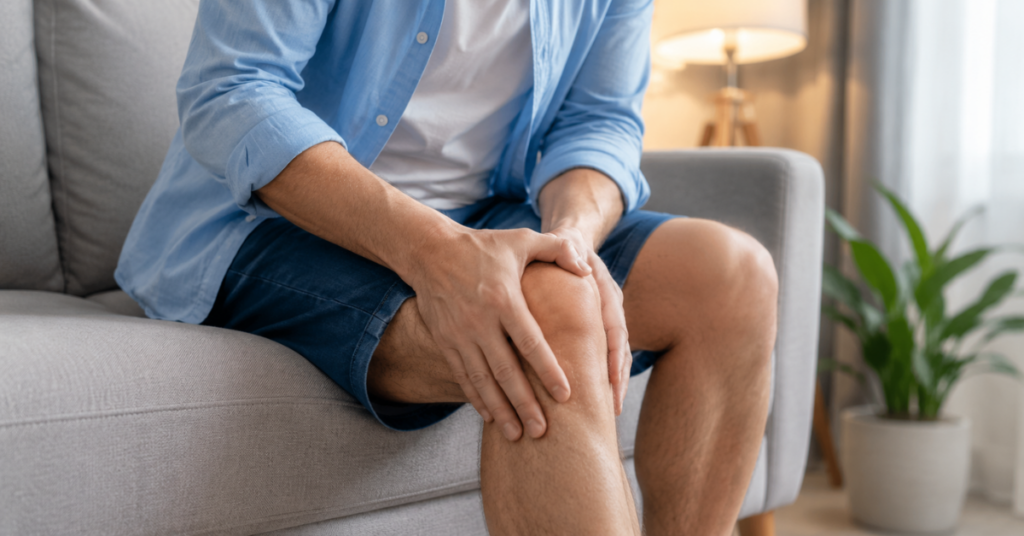
Do you ever get up from sitting for a long period of time and feel your knee is stiff, tight or uncomfortable? This may happen if the knee stays in the same position for too long. Stiffness is not always a problem, but if it happens often, hurts or gets worse, then it could mean there’s a joint issue that needs to be checked out.
Why Do My Knees Become Stiff After Sitting?
When you sit for long periods of time, you’re not moving the knee much, and that can cause the muscles and joint tissues around the knee to become tight. You may also notice that the joint is less flexible when you first get up. In many cases gentle movement restores normal mobility in a few minutes.
But if it persists over a longer period or happens regularly, there may be another cause. Knee osteoarthritis, inflammation, previous injuries or age-related changes can cause the joint to move differently.
Common Causes Of Stiffness In The Knee
There are a few reasons why you get stiff after sitting for a long time:
- Prolonged inactivity: Remaining in a single position may temporarily decrease joint mobility and cause the knee to feel tight.
- Osteoarthritis: This is the wear and tear and slow changes in the joint that can cause stiffness, pain and decreased movement, especially after resting.
- Tightness of muscles or joints: Tightness in the thigh, calf, or surrounding muscles can prevent comfortable knee motion.
- History of knee injury: Sometimes a previous ligament, cartilage or meniscus injury may be a factor in ongoing stiffness.
- Inflammation: Swelling or irritation in or around the knee can make it painful to move.
- Age-related changes: Joints change naturally over time so stiffness may increase, but it is not an inevitable part of aging.
What Helps Stiffness In The Knee?
Movement is often useful regularly. If you are sitting for long periods, take short breaks to move, and gently straighten and bend your knee before standing. Light stretching and gradual exercise also help you keep your flexibility and strength.
Maintaining a normal body weight can relieve stress on the knee joints. Don’t stay in one position for long. Gradually increase exercise instead of suddenly increasing intensity.
But if stiffness continues after these measures, an orthopedic evaluation can help find the underlying cause. The treatment of knee pain treatment in indore will depend on the findings and may involve activity modification, physiotherapy, exercises or other treatment specific to the problem.
When Should I See A doctor?
If knee stiffness continues or becomes worse, or if there is marked pain or swelling, consult an orthopedic specialist. Medical assessment is especially important if symptoms affect walking or daily activities, or if the knee locks, feels unstable or is difficult to move.
If you see a doctor they can assess your symptoms and examine the knee and order imaging or other tests if appropriate. Assessing early can help to identify conditions that may be suitable for timely treatment.
FAQs
Is it normal to have tight knees after sitting?
Mild stiffness after sitting for a long time is common and usually improves with movement. If it happens often or lasts for a long time, it should be evaluated.”
Why does my knee hurt when I sit down to stand up?
The knee may be temporarily stiff from having been still. You might also have pain when standing because of things like osteoarthritis, inflammation, or an old injury.
Is stiffness in the knee a sign of arthritis?
Yes, stiffness can happen with knee arthritis, particularly after resting or sitting. But stiffness doesn’t necessarily mean arthritis. There are other conditions that can cause similar symptoms.
How can I stop my knee from getting stiff after sitting?
Break up your sitting time and don’t stay in the same position for a long period of time. A bit of stretching and regular, appropriate exercise can also help keep the knee joints mobile.
When should you see a doctor for knee stiffness?
If the stiffness continues, gets worse, or interferes with your normal activities, seek medical evaluation. Go get it checked if it’s accompanied by swelling, significant pain, locking, instability, or difficulty moving the knee.