
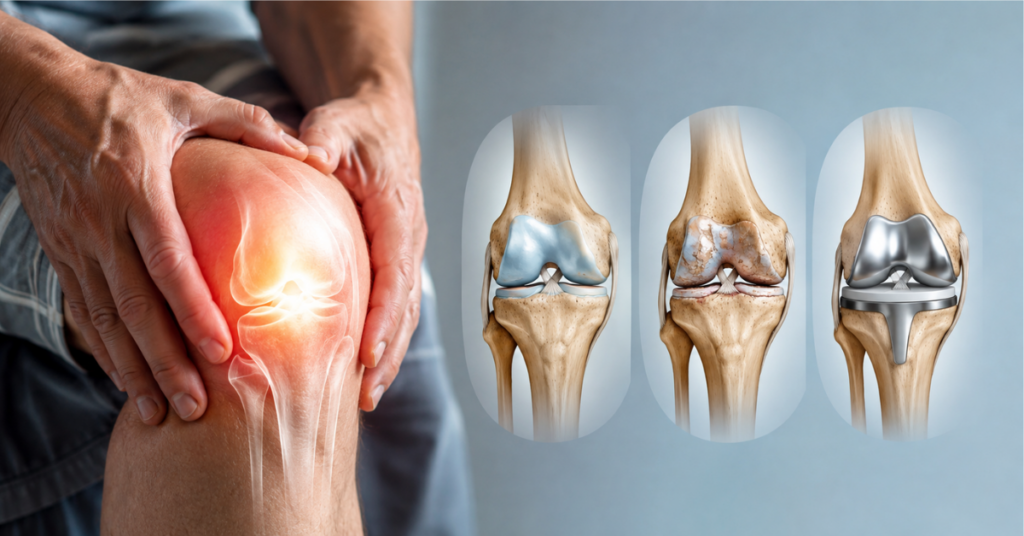
Knee replacement is usually recommended only if the damage to the knee is severe enough to result in persistent pain and significant problems with mobility or daily tasks. However, there is no set percentage of cartilage damage that automatically indicates a person needs surgery. The doctor looks at the overall picture, including symptoms, examination findings, X-rays, how the patient moves, and how the patient responds to treatment.
When Is Knee Replacement Generally Considered?
If osteoarthritis is severe and has caused significant damage to the knee joint, knee replacement may be recommended. Osteoarthritis is a disease that causes the cartilage that cushions the ends of bones to break down. As the cartilage wears down, the bones may rub together, causing pain, stiffness, and loss of movement.
Signs that might make a doctor think about replacement include:
- Constant knee pain, including pain while resting or at night
- Difficulty walking, climbing stairs, or standing for long periods
- Difficulty with daily activities without assistance
- Limited range of motion or marked stiffness of the knee
- Swelling or tenderness that persists over time
- Pain that interferes with sleep, work, exercise, or other activities
- Limited benefit from appropriate non-surgical management
Severe Cartilage Damage: Surgery Always?
Not necessarily. Imaging findings in isolation are not definitive for the need for knee replacement. Some people may have significant arthritis on an X-ray but have manageable symptoms and remain active. For others, pain and functional limitations may be significant enough to warrant surgery.
An orthopedic specialist may consider treatments such as:
- Exercise and physiotherapy
- Weight management, if appropriate
- Painkiller medicines
- Adjusting daily activities
- Walking aids, as required
- Injections in selected patients
When these approaches no longer provide sufficient relief, knee replacement may be discussed.
What Can X-rays Do?
X-rays can demonstrate the extent of damage to a joint, such as narrowing of the space between bones, alterations in the bone itself, and other indicators of advanced arthritis. Sometimes, more imaging may be needed to get a better picture of the knee.
But an X-ray is only one part of the assessment. The doctor also checks the knee and evaluates how the condition affects the person’s ability to walk, work, sleep, and carry out daily activities.
The Choice Is Yours
Knee replacement is usually advised when pain and functional loss are severe, the joint damage fits the clinical picture, and non-surgical options have failed to provide sufficient relief. Age is not the sole factor in determining if a person needs surgery. Other important considerations include general health, other medical conditions, activity level, expectations, and the ability to safely undergo and recover from surgery.
If knee pain is persistent or increasingly limits your daily activities, an orthopedic evaluation can help determine whether continued non-surgical care or a surgical option is appropriate. If you are a patient searching for options for specialist evaluation and treatment, speaking to a specialist orthopedic surgeon who provides knee replacement surgery in indore about your condition can help you learn about the best approach for your individual needs.
FAQs
How do doctors know when a knee replacement is needed?
Doctors take into account pain severity, mobility, any limitations to daily activities, physical examination, X-ray results, general health, and response to non-surgical treatment. No single test can tell you whether surgery is required.
Do you have to have really bad knees for knee replacement?
Typically, when the joint is severely damaged and the patient has significant symptoms and functional problems, replacement is considered, but there’s no particular amount of damage that automatically requires surgery.
Is it possible to avoid knee replacement with non-surgical treatment?
In many patients, symptoms can often be managed with exercise, physical therapy, medications, weight management, activity modifications or selected injections. Treatment depends on the person’s condition.
What happens if you don’t treat severe knee arthritis?
“Arthritis may still cause pain, stiffness and limited movement. But the rate of progression differs from person to person and untreated arthritis is not automatically a road to surgery.
How do X-rays determine if you need a new knee?
X-rays enable doctors to see narrowing of the joint space and indirectly, loss of cartilage, changes in the bone and other signs of arthritis. They are interpreted according to symptoms, examination findings and functional limitations.