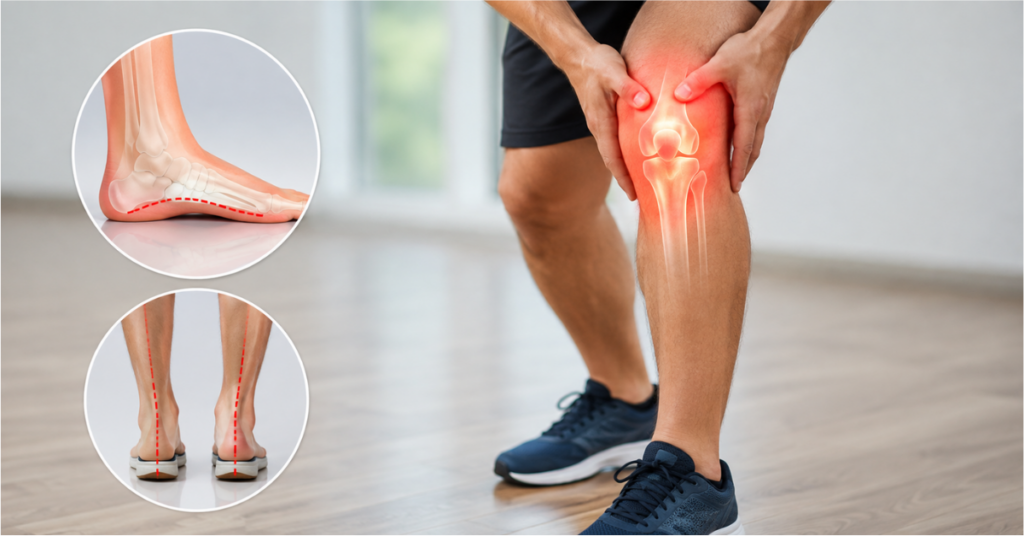
Flat feet, also called fallen arches, are more common than many people realize. Some people never experience problems, while others develop discomfort that affects daily life. When the natural arch of the foot collapses, it can change the way the body moves, leading to extra pressure on the knees. Understanding the connection between foot structure and joint health can help prevent long-term pain and improve mobility.
What Are Flat Feet And How Do They Affect Body Alignment?
Flat feet occur when the arches of the feet are low or completely collapsed, causing the entire sole to touch the ground. This condition may be present from childhood or develop later due to aging, injury, weight gain, or weakened tendons. Foot alignment plays an important role in supporting the body’s weight during standing and walking.
When the arches flatten, the feet often roll inward, a movement known as overpronation. This changes lower limb alignment, affecting the ankles, knees, hips, and even the lower back. Over time, this altered walking posture may increase stress on the joints.
Can Flat Feet Cause Chronic Knee Pain?
Yes, flat feet can contribute to chronic knee pain by changing how force is distributed across the legs. Poor gait imbalance places extra pressure on the knee joint, especially around the kneecap. Repeated stress during walking, climbing stairs, or running may gradually lead to discomfort.
Common symptoms include:
- Persistent knee pain after walking or standing
- Swelling around the knee
- Foot fatigue or aching arches
- Uneven shoe wear
- Difficulty during physical activities
Not everyone with flat feet develops knee pain, but the risk is higher when the condition is combined with poor footwear, excess body weight, previous injuries, or high-impact activities.
How Is the Problem Diagnosed And Treated?
Early diagnosis helps identify the root cause of knee pain rather than simply treating the symptoms. An orthopedic specialist will usually review your medical history, examine your feet and knees, assess your walking pattern, and recommend imaging tests if needed.
Treatment depends on the severity of symptoms and may include:
- Arch support or custom shoe inserts
- Physical therapy to strengthen foot and leg muscles
- Stretching exercises for tight calves and the Achilles tendon
- Strengthening exercises for the hips and knees
- Weight management and activity modification
- Pain-relieving medicines when appropriate
Surgery is generally considered only in selected cases when conservative treatment does not provide enough relief.
Lifestyle Changes And Exercises That May Help
Simple daily habits can reduce knee joint stress and improve comfort. Wearing supportive footwear, avoiding worn-out shoes, and maintaining a healthy body weight can improve foot alignment. Choosing low-impact exercises like swimming or cycling also reduces pressure on the knees.
Helpful exercises include:
- Calf stretches
- Towel scrunches for foot muscles
- Heel raises
- Toe curls
- Balance exercises to improve stability
These activities should be performed consistently and under professional guidance if pain is significant.
If knee pain continues despite home care, affects your daily routine, or is accompanied by swelling, instability, or difficulty walking, it is important to consult an orthopedic specialist for a proper evaluation. Seeking timely Knee Pain Treatment in Indore can help identify the underlying cause and guide the most appropriate management plan, allowing you to stay active with greater confidence.
FAQs
Can flat feet increase the risk of knee arthritis?
Flat feet may increase stress on the knee joint over time, which can contribute to joint wear in some people. However, many factors, including age, weight, and previous injuries, also influence arthritis risk.
Are orthotics effective for flat feet?
Yes, orthotics or supportive shoe inserts can improve foot positioning and reduce pressure on the knees. The right type depends on your foot structure and symptoms.
Can children outgrow flat feet?
Many children have flexible flat feet that improve as they grow. If pain, stiffness, or difficulty walking develops, a medical evaluation is recommended.
Is surgery always required for flat feet?
No. Most people improve with supportive footwear, exercises, physical therapy, and lifestyle changes. Surgery is reserved for severe or persistent cases after careful assessment.
Which exercises can help reduce knee pain caused by flat feet?
Calf stretches, heel raises, toe curls, towel scrunches, and balance exercises may strengthen the feet and improve movement. An orthopedic professional or physical therapist can recommend the safest routine for your condition.