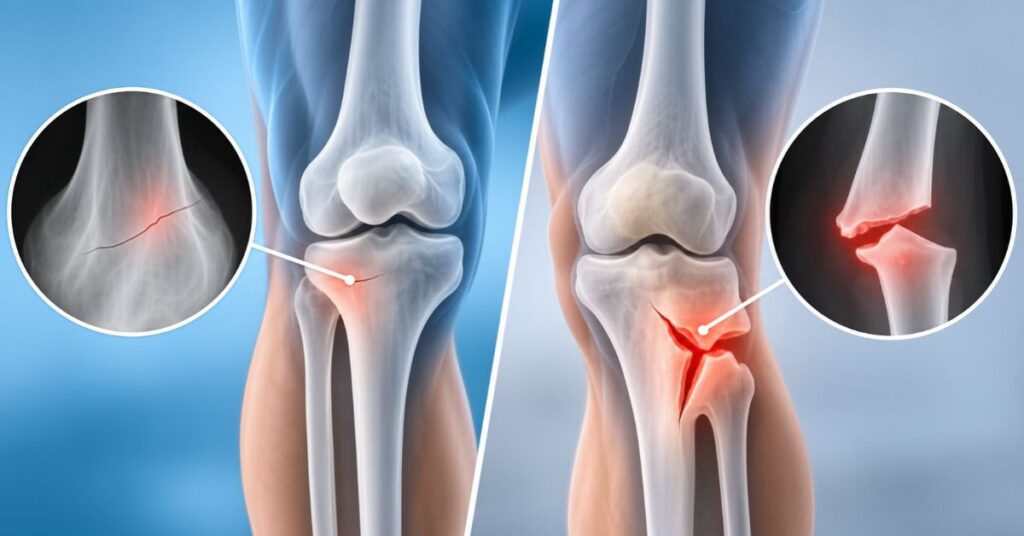
A fracture occurs when a bone develops a crack or breaks due to an injury, accident, fall, or repeated stress. However, not all fractures are the same. A hairline fracture involves a small crack in the bone, whereas a complete fracture means the bone has broken into two or more pieces.
Understanding the difference between these injuries can help identify symptoms and seek timely medical attention.
What Is a Hairline Fracture?
A hairline fracture is a small, thin crack in the bone that usually does not cause the bone to separate into different pieces. It may develop due to repetitive physical activity, sports injuries, or minor trauma.
Common symptoms include:
- Mild to moderate pain that increases with movement.
- Localised swelling and tenderness.
- Pain while walking or putting weight on the affected area.
- Discomfort that may increase during physical activity.
Hairline fractures can sometimes be difficult to identify because symptoms may develop gradually.
What Is a Complete Fracture?
A complete fracture occurs when the bone breaks entirely into two or more separate pieces. It can happen due to road accidents, serious falls, sports injuries, or direct impact.
Common symptoms include:
- Severe pain around the injured area.
- Noticeable swelling and bruising.
- Difficulty moving the affected limb.
- Visible deformity in some cases.
- Inability to put weight on the injured leg or foot.
A complete fracture may require immobilisation or surgical treatment, depending on the location, severity, and displacement of the broken bone.
Hairline Fracture vs Complete Fracture: Key Differences
The main difference is the extent of damage to the bone. A hairline fracture involves a small crack, while a complete fracture breaks the bone entirely. Both conditions require proper medical evaluation to determine the appropriate treatment.
How Are These Fractures Diagnosed?
An orthopaedic specialist may recommend an X-ray to examine the affected bone. If a hairline fracture is not clearly visible on an X-ray, an MRI or other imaging investigation may be suggested.
Early diagnosis helps doctors understand the extent of the injury and plan suitable treatment.
When Should You Consult an Orthopedic Doctor?
Do not ignore persistent bone pain, swelling, or difficulty moving a limb after an injury. Severe pain, visible deformity, or an open wound requires immediate medical attention.
If you experience these symptoms, consult Dr. Aditya Lakhotia, Orthopedic Doctor in Indore, for an appropriate evaluation and guidance regarding fracture treatment.
Consult Dr. Aditya Lakhotia for Fracture Treatment in Indore
Dr. Aditya Lakhotia is a Singapore-trained Orthopedic Surgeon and Mako-certified expert in Indore. He provides consultation for various bone and joint conditions, including fractures, accident-related injuries, and joint problems.
With his specialised training and experience in orthopaedics, patients can receive guidance on fracture evaluation, treatment options, and recovery planning.
Consult Dr. Aditya Lakhotia, Orthopedic Surgeon in Indore, for professional guidance on hairline fractures, complete fractures, and other bone injuries.