
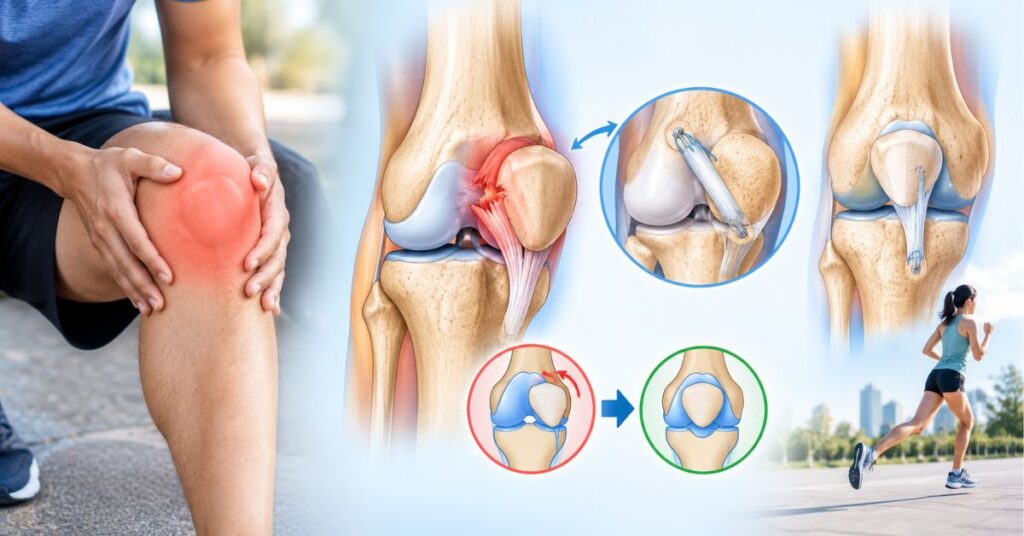
Repeated kneecap dislocation can cause knee pain, swelling, instability, and difficulty performing everyday activities. It commonly occurs when the patella (kneecap) moves out of its normal position. For patients experiencing recurrent dislocations, MPFL reconstruction surgery in Indore may be a suitable treatment option after an orthopedic evaluation.
What Is MPFL Reconstruction Surgery?
The medial patellofemoral ligament (MPFL) is an important ligament that helps keep the kneecap stable and prevents it from moving too far toward the outer side of the knee.
When this ligament is damaged due to a sports injury, fall, or repeated kneecap dislocations, the knee may become unstable. MPFL reconstruction surgery involves creating a new ligament using a tendon graft to improve kneecap stability.
Can MPFL Reconstruction Prevent Repeated Kneecap Dislocations?
Yes, MPFL reconstruction can significantly reduce the risk of repeated kneecap dislocations in appropriately selected patients. By restoring the ligament’s stabilizing function, the procedure helps keep the kneecap aligned during knee movement.
However, the outcome depends on factors such as the severity of the injury, knee alignment, bone structure, and rehabilitation after surgery. Some patients may require additional procedures if underlying anatomical problems contribute to instability.
When Is MPFL Reconstruction Surgery Recommended?
An orthopedic specialist may consider MPFL reconstruction when a patient experiences:
- Repeated kneecap dislocations despite appropriate non-surgical treatment.
- Persistent knee instability during walking, running, or sports.
- MPFL ligament damage following a kneecap dislocation.
- Difficulty returning to physical activities due to fear of another dislocation.
- Recurrent patellar instability affecting daily life.
Not every patient with a first-time kneecap dislocation needs surgery. Treatment depends on the individual condition and clinical assessment.
What Happens During MPFL Reconstruction Surgery?
The procedure generally involves the following steps:
- Evaluation: The surgeon examines the knee and may recommend X-rays or an MRI to assess ligament damage and kneecap alignment.
- Ligament reconstruction: A tendon graft is used to reconstruct the damaged MPFL.
- Kneecap stabilization: The graft is positioned to help guide the kneecap and improve stability.
- Rehabilitation: A structured physiotherapy program helps restore knee movement, strength, and function.
The exact surgical approach depends on the patient’s anatomy and associated knee injuries.
How Long Does Recovery Take After MPFL Reconstruction?
Recovery varies from patient to patient. During the initial weeks, treatment may include a knee brace, activity restrictions, and guided physiotherapy. Gradually, exercises help improve flexibility, muscle strength, balance, and knee control.
Returning to running and sports requires adequate healing, strength, and functional recovery. It may take several months, and patients should resume high-impact activities only after clearance from their treating surgeon.
Why Is Early Evaluation Important?
Repeated kneecap dislocations can damage the cartilage and affect long-term knee function. An early orthopedic assessment can help identify the cause of instability and determine whether physiotherapy, activity modification, or surgery is appropriate.
Patients looking for MPFL reconstruction surgery in Indore should consult an experienced orthopedic surgeon for an individualized treatment plan based on their symptoms, imaging results, and activity goals.
MPFL reconstruction surgery can help prevent recurrent kneecap dislocations by restoring an important stabilizing ligament. With proper patient selection, appropriate surgical treatment, and consistent rehabilitation, many patients can improve knee stability and return to their daily activities.
If you experience repeated kneecap dislocations or persistent knee instability, consult an orthopedic specialist in Indore to understand your treatment options.