
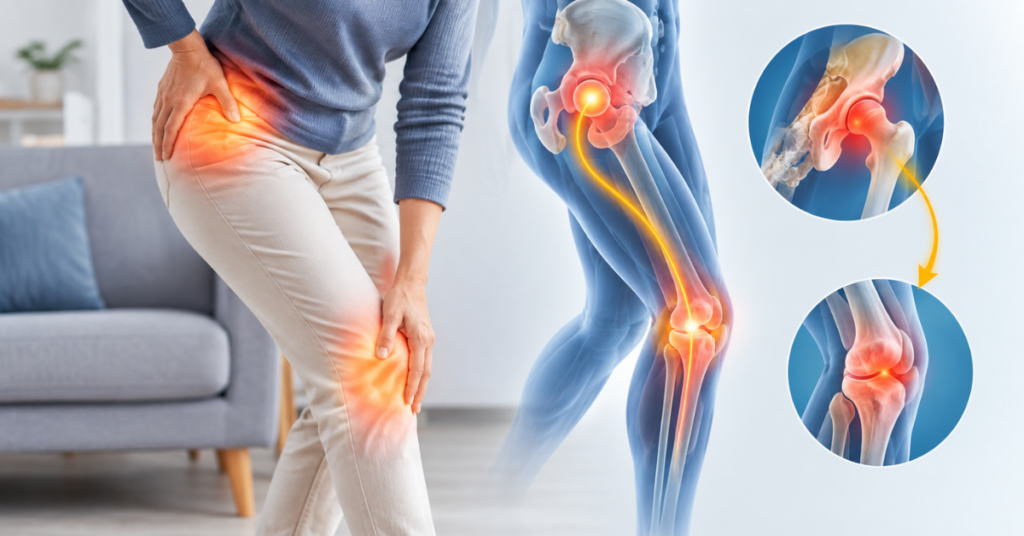
Hip and knee pain can be confusing sometimes because a problem in the hip can feel like it is around the knee. This is called referred pain. Because the nerve pathways for the hip and knee are shared, pain felt in the hip may be experienced elsewhere.
How Can A Hip Problem Cause Knee Pain?
If the hip has arthritis, inflammation, injury, or some other problem, nerves can send pain signals from the hip down the thigh and toward the knee. That is, knee pain doesn’t always mean there is a problem inside the knee.
What Is Referred Pain?
Referred pain is pain that is perceived in a different location from the actual source of the problem. For example, if you have an ulcer in your stomach, you may experience pain in your back or chest rather than in your abdomen. This phenomenon occurs because the nerves that carry pain signals from the affected organ share pathways with nerves from other parts of the body. When these shared nerves send signals to the brain, the brain may misinterpret the origin of the pain, leading to the sensation being felt in an area distant from the true source. This can make it challenging to diagnose the underlying issue without further investigation, as the pain may not be where the problem lies. Referred pain is common in conditions affecting organs such as the heart, lungs, and gastrointestinal tract.
Referred pain is pain felt away from the place where it originates. The hip and knee share a common nerve supply. Signals travel through interconnected pathways, and the brain may not always be able to pinpoint the exact origin of pain.
Signs Pain May Be Coming From The Hip
Some symptoms may point to a source in the hip:
- Pain in the front of the knee, thigh, or groin
- Stiff hips when walking or getting up
- Trouble putting on socks or shoes
- Decreased range of motion (ROM) of the hip
- Limping or altered gait
- Knee pain without an obvious knee injury
A primary knee problem may be suggested by swelling, tenderness, locking, or a definite injury of the knee.
How Doctors Find The Pain’s Source
Your orthopedic specialist will review your symptoms and examine both joints. They can assess movement, strength, gait, and tenderness. X-rays or other imaging studies may be recommended. Looking at both joints is important, as treating only the knee may not be effective if the hip is the true source of the pain.
When To Seek Orthopedic Specialist?
If pain continues, interferes with walking or daily activities, keeps returning, or has no clear reason, seek an orthopedic evaluation. The diagnosis will guide treatment, which may include activity modification, physical therapy, medications, injections, or other alternatives. If significant hip damage is confirmed and surgery is being considered, patients can discuss options like hip replacement surgery in Indore with a qualified orthopedic specialist.
FAQs
Can hip arthritis lead to knee pain?
Yes. Hip arthritis can cause referred pain in the thigh or knee even if the knee itself is not the primary problem.
How do I know if my knee pain is coming from my hip?
A hip source may be suggested by groin or thigh pain, stiffness of the hip, or difficulty putting on shoes. This requires investigation.
Can a hip problem cause knee pain , without any hip pain ?
Yes. Some people only complain of knee pain or thigh pain, so both joints may need to be examined.
To find the source of pain, which tests are done?
Physical examination and X-rays can be used by doctors. Depending on the exam, other imaging may be considered.
Do you always need surgery for hip pain?
No. the treatment depends on the underlying condition, how severe it is and what the patient’s symptoms are. Many hip problems can be treated non-surgically.